

Bearings FAQ: Answers on Selection, Designs and Applications
Bearings and bearing units are essential machine elements used for the reliable support and guidance of shafts. Depending on the installation situation, different designs such as flange bearings or pillow block bearings are used.
This FAQ page focuses on flange bearings and answers the most important questions regarding selection, designs, materials, and hygienic versions.
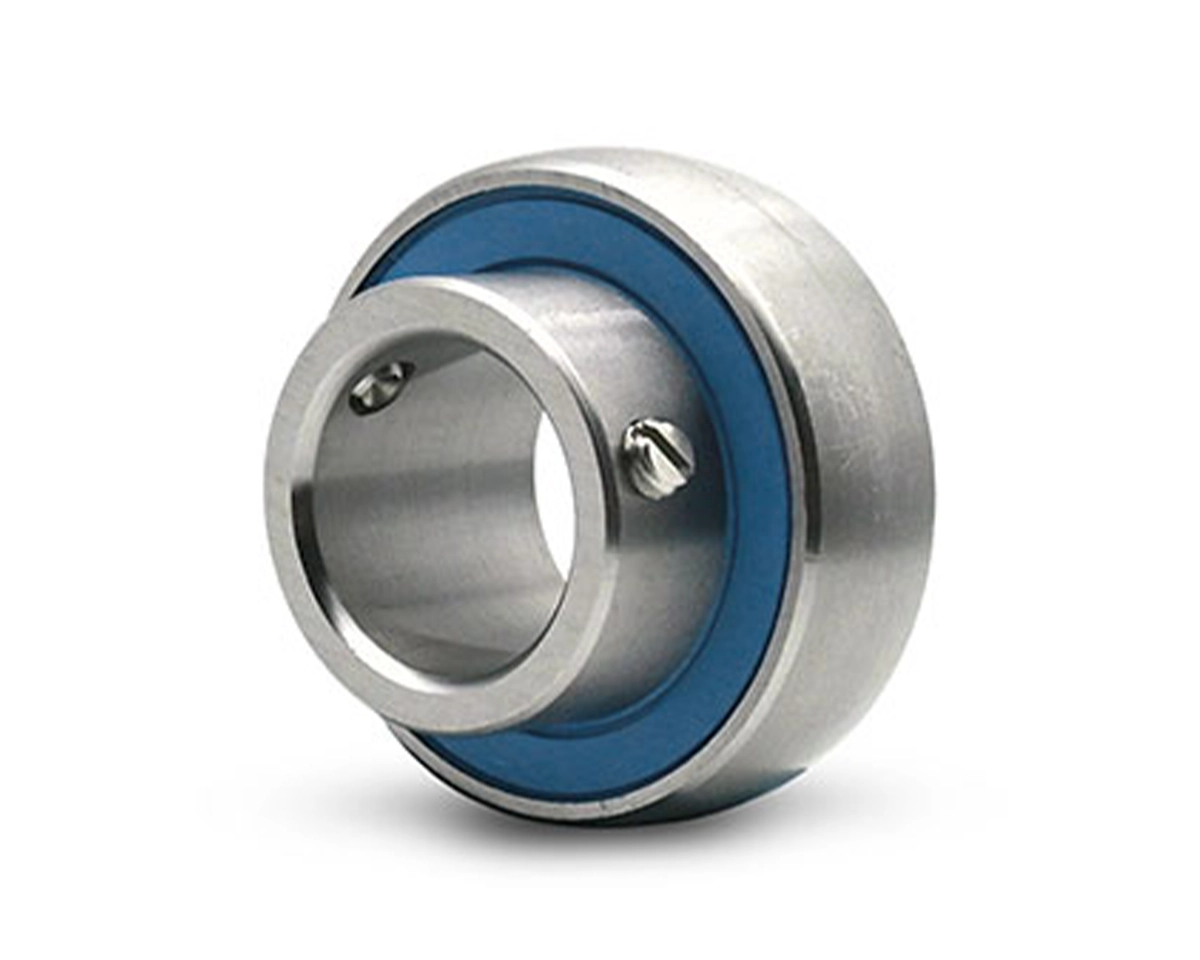
Bearing
A bearing is the actual rolling or plain bearing. It guides the shaft and reduces friction during motion.
Bearing Unit
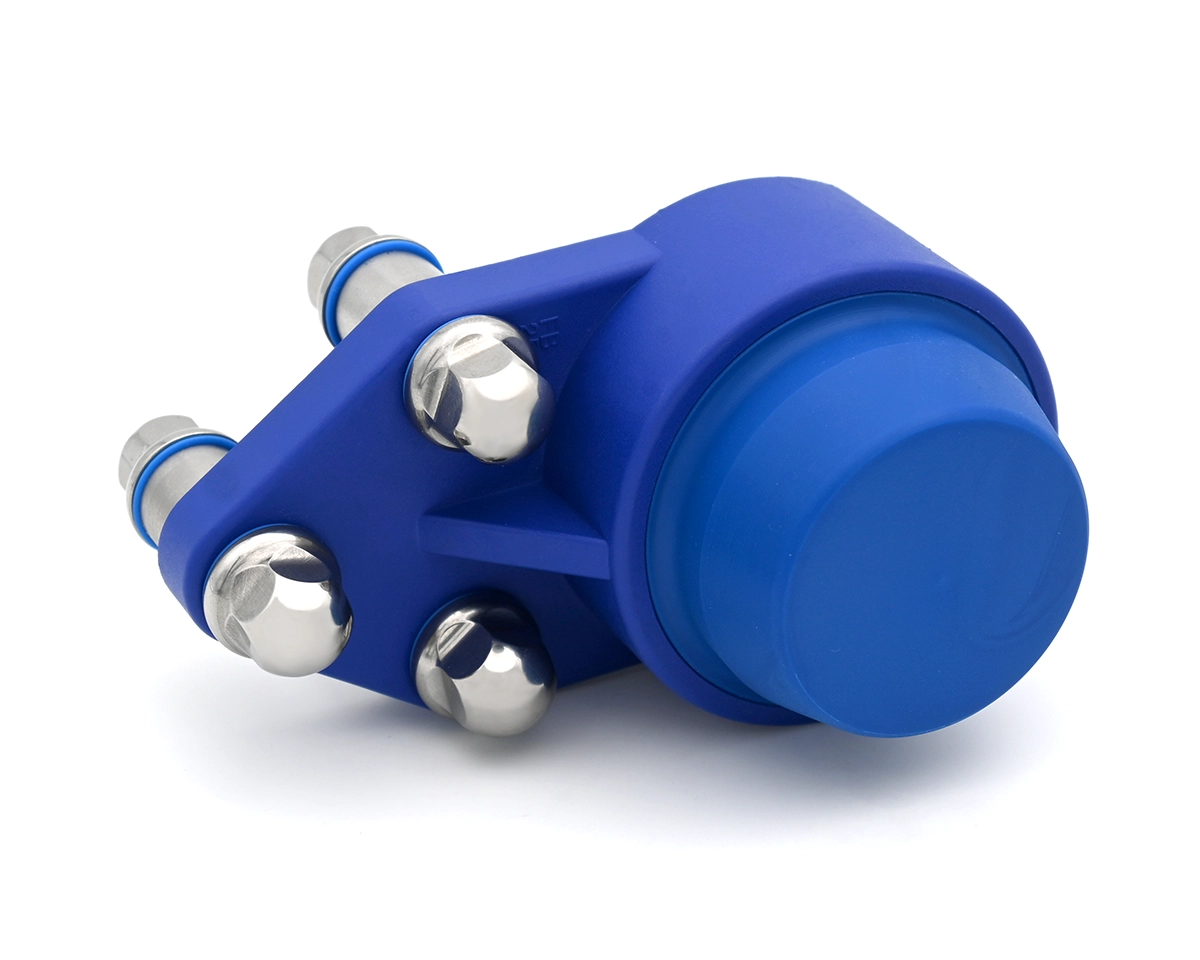
A bearing unit is a general term for the combination of a bearing with a matching housing.
Flange Bearing
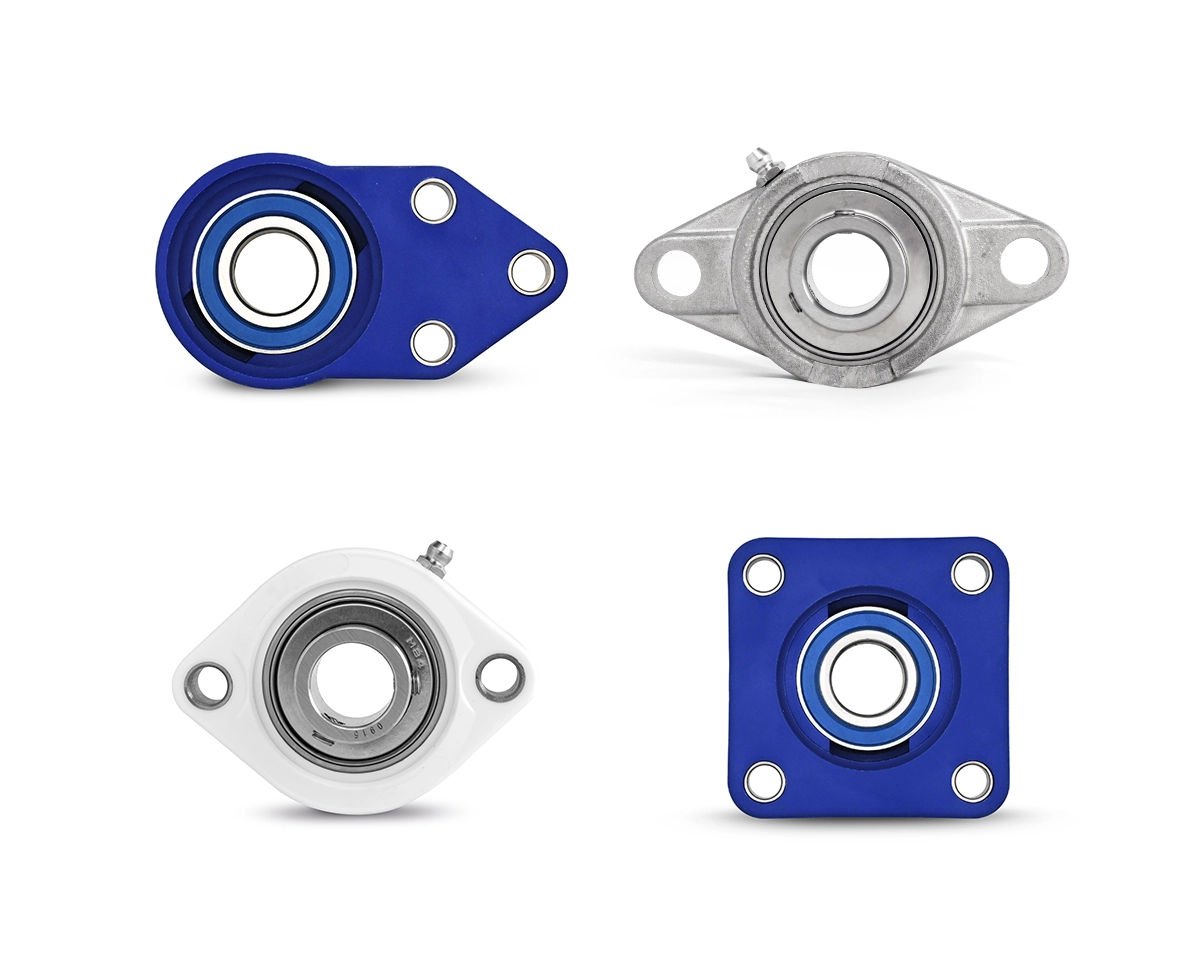
A flange bearing is a bearing unit with an integrated flange plate for mounting on machine walls or components. It is used when shafts need to be supported directly on flat surfaces.
Basics of Bearings
A bearing is the actual rolling or plain bearing and is used to guide shafts and reduce friction.
A bearing unit combines the bearing with a housing, simplifying installation and ensuring stable integration into machinery.
A flange bearing is a specific type of bearing unit with an integrated flange plate. It is mounted directly onto machine walls or components and is particularly suitable for defined installation positions.
A flange bearing is a pre-assembled bearing unit consisting of a bearing and a housing with flange mounting. It allows direct installation on flat surfaces such as machine walls or structural components.
Flange bearings are used to support, align, and position shafts securely. They are widely used in mechanical engineering, plant construction, and conveyor technology.
Flange bearings are available in different designs, mainly distinguished by the number and arrangement of mounting holes.
- 2-bolt flange bearings: compact design for simple applications
- 3-bolt flange bearings: often used for round housings with even load distribution
- 4-bolt flange bearings: robust design for higher loads
The choice depends on installation conditions, load requirements, and stability needs.
A flange bearing is used when the shaft needs to be mounted on a vertical or flat surface. It is particularly suitable for applications with limited installation space or defined mounting positions.
Pillow block bearings, on the other hand, are mounted on horizontal surfaces and are commonly used for free-standing shafts or longer shaft supports.
The decision depends on installation orientation, design, and load conditions.
At MOVET, flange bearings are available in different materials depending on the application:
- Stainless steel (V2A): for corrosive environments and hygienic applications, especially in food and pharmaceutical industries
- Plastic housings (PBT): lightweight, corrosion-resistant, and resistant to moisture and chemicals – ideal for hygienic environments
The selection depends on environmental factors such as moisture, chemicals, temperature, cleaning processes, hygiene requirements, and protection classes (e.g. IP69K).
Flange bearings are equipped with different types of seals depending on the application to protect against dirt, moisture, and environmental influences.
- NBR (Nitrile rubber): standard seal with good resistance to oils and greases
- EPDM (Ethylene Propylene Diene Monomer rubber): ideal for wet environments and cleaning processes, FDA approved
- TPU (Thermoplastic Polyurethane elastomer): high wear resistance and mechanical strength, FDA approved
Choosing the right seal significantly influences service life and operational reliability, especially in demanding or hygienic environments.
Flange bearings typically use deep groove ball bearings, as they can support both radial and moderate axial loads.
Depending on the application, special variants are also used:
- sealed bearings for dusty or wet environments
- low-maintenance or lifetime-lubricated versions
- stainless steel bearings for hygienic applications
The selection depends on load, speed, and environmental conditions.
Plain bearings operate by sliding contact between the shaft and bearing surface, unlike rolling bearings which use rolling elements. They offer a simple design, high load capacity, and smooth, quiet operation.
MOVET plain bearings are low-maintenance or maintenance-free, as little or no additional lubrication is required.
- High contamination tolerance: suitable for dusty or abrasive environments
- Low maintenance: minimal or no lubrication required
- Quiet operation: ideal for low-noise applications
They are commonly used in demanding applications where robust and durable solutions are required, including extreme environments such as low temperatures or outdoor use.
Technical Selection
Not all flange bearings require grease nipples, as many modern bearing inserts are pre-lubricated for life.
Lifetime-lubricated bearings:
- no relubrication required
- sealed systems retain lubricant permanently
- reduced maintenance and fewer failure points
In hygienic solutions such as MOVET Blue Waterproof flange bearings, grease nipples are intentionally omitted. These bearings are designed for maintenance-free operation.
Why do some bearings still include grease nipples?
- optional use with relubrication systems
- special applications requiring regular maintenance
MOVET stainless steel bearing inserts are generally lifetime-lubricated systems. Additional lubrication is usually unnecessary and may damage seals or introduce contamination.
Therefore, relubrication is not recommended unless specifically required.
The correct flange bearing size is primarily determined by the shaft diameter. Additional factors such as load and installation conditions must also be considered.
- Shaft diameter: determines bearing size
- Load: radial and axial forces
- Installation space: available mounting area and fixation options
For reliable selection, refer to technical specifications or request individual support.
Flange bearings are primarily designed to support radial loads. Depending on the bearing type, they can also handle limited axial loads.
Actual load capacity depends on the bearing insert, housing, and mounting conditions. For high-load applications, appropriately designed variants should be selected.
The permissible speed of a flange bearing depends on the bearing type and lubrication.
High speeds generate heat and can affect service life. Therefore, speed limits and lubrication conditions must be considered during selection.
Hygiene & Special Applications
Flange bearings used in the food industry must be corrosion-resistant, easy to clean, and suitable for food contact environments.
Suitable solutions include:
- Stainless steel flange bearings (V2A / AISI 304) : corrosion-resistant and suitable for hygienic environments
- MOVET Blue flange bearings : hygienically optimized with smooth surfaces and food-grade components
- MOVET Blue Waterproof flange bearings : designed for hygienic environments, pre-lubricated with food-grade grease and maintenance-free
The MOVET Blue Waterproof series offers additional advantages:
- food-grade seals to protect against moisture and contamination
- thermoplastic housing (PBT) resistant to cleaning chemicals
- smooth surfaces for easy cleaning
- long service life even with frequent washdowns
- blue color for improved visual detection
These features make them ideal for hygienic and high-cleaning environments.
The IP69K protection rating represents the highest level of protection against water and dust ingress in industrial applications. It ensures that components remain fully sealed even under high-pressure and high-temperature cleaning.
Flange bearings with IP69K are designed for applications requiring regular high-pressure cleaning, such as in food, beverage, and pharmaceutical industries.
- High-pressure water resistance (80–100 bar)
- Temperature resistance (-35 °C to +95 °C)
- Protection against contamination and moisture
MOVET Blue Waterproof flange bearings feature multi-stage sealing systems and corrosion-resistant materials for reliable operation under extreme cleaning conditions.
The service life of flange bearings depends on load, speed, lubrication, and environmental conditions.
With proper selection and use, flange bearings can operate reliably for many years. Regular maintenance and correct specification are key factors.
Proper cleaning depends on bearing type and sealing system. Pressure limits must be observed, especially when using high-pressure cleaning.
Standard flange bearings:
- clean with low pressure (approx. 1 bar)
- use mild alkaline cleaners (max. 40 °C, up to 10 minutes)
- rinse with warm water (max. 60 °C, 8–12 bar)
- maintain a distance of approx. 300 mm and 45° spray angle
- avoid aggressive chemicals and high pressure for sensitive designs
Improper cleaning can damage seals and reduce bearing life.
Waterproof flange bearings (IP69K):
- designed for high-pressure cleaning
- resistant up to approx. 80–100 bar
- suitable for intensive washdown processes
MOVET Blue Waterproof bearings are designed with multi-stage sealing systems and food-grade lubricants.
General recommendations:
- avoid hard tools – use soft brushes or plastic tools
- regular cleaning increases service life
- protective caps and seals provide additional protection
Correct installation is critical for sealing performance and long-term functionality, especially in hygienic environments.
Shaft seal installation:
- ensure correct orientation (groove facing inward)
- lightly lubricate outer diameter and sealing lips with food-grade grease
- insert evenly until flush
Protective cap installation:
- lightly lubricate outer diameter and sealing lips
- insert closed cap evenly
- slide open cap carefully onto shaft
Important notes:
- install caps after reaching operating temperature to avoid pressure buildup
- do not add additional grease (bearings are lifetime-lubricated)
- run-in at low speed before full load
Step-by-step installation guide:
Waterproof flange bearing installation guide (PDF)
Further Information on Bearings
Bearing Types Comparison
| Bearing Type | Characteristics | Advantages | Typical Applications |
|---|---|---|---|
| Flange Bearings | Bearing unit with flange mounting | easy installation, compact design | Mechanical engineering, conveyor systems, plant engineering |
| Pillow Block Bearings | Bearing unit for mounting on flat surfaces | stable support, high load capacity | Drives, shaft support, conveyor systems |
| Plain Bearings | Bearing without rolling elements | low maintenance, contamination-resistant, quiet operation | Dusty environments, low speeds, marine applications |
| Stainless Steel Bearings | Corrosion-resistant design | hygienic, durable, resistant to cleaning processes | Food industry, pharmaceuticals, wet environments |
| IP69K Flange Bearings | Sealed hygienic bearing units | resistant to high-pressure and high-temperature cleaning | Food, beverage industry, hygienic applications |
Temperature Ranges of Bearing Units Overview
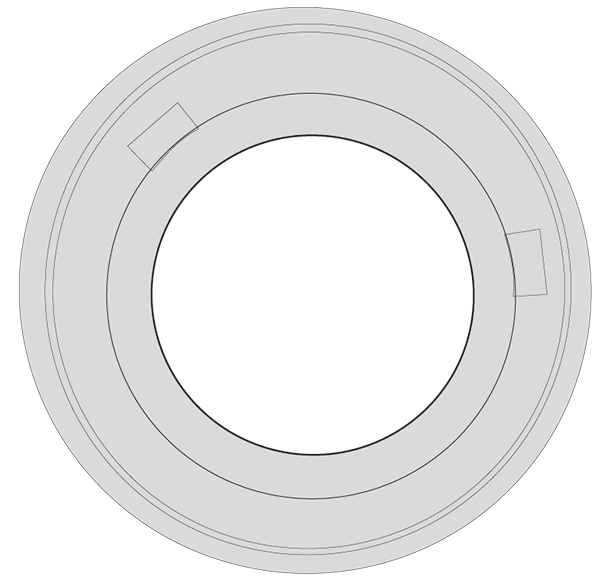
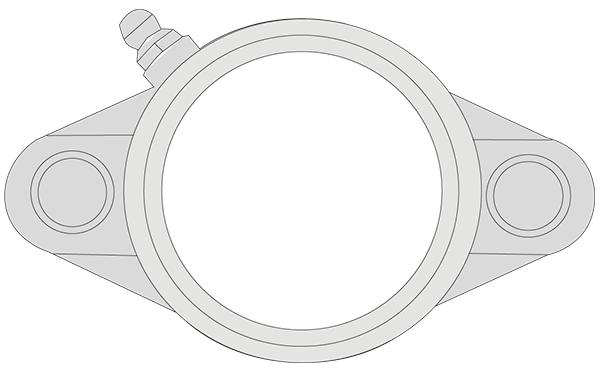
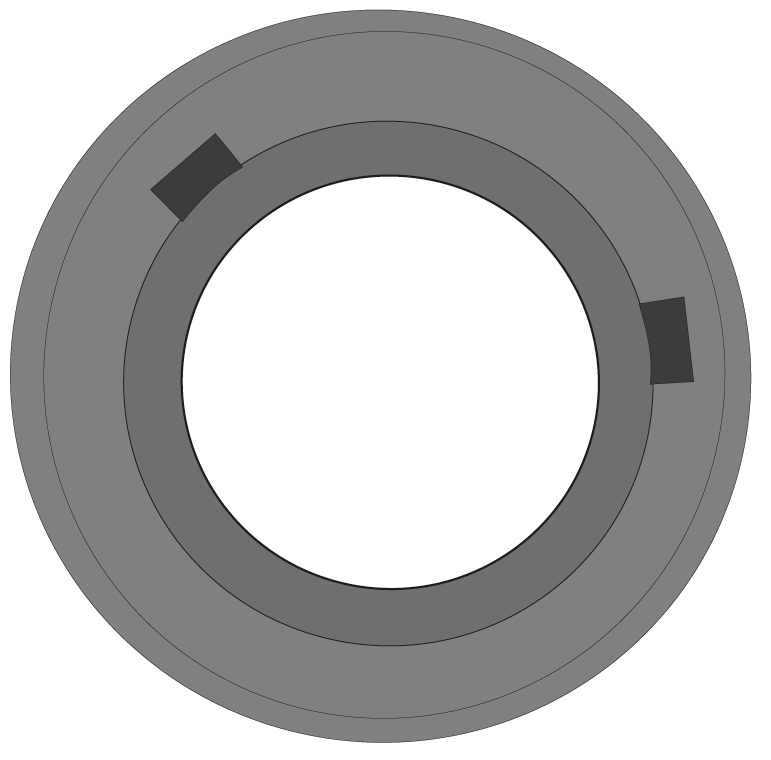
The permissible operating temperature of bearing units depends on the bearing insert, seals, and lubricant used. The following overview shows typical temperature ranges for different bearing solutions.
| Housing | Bearing Insert | Bearing Type | Operating Temperature | |
|---|---|---|---|---|
|
+ |
|
MB / MBG / MUC * | -35 °C to +90 °C |
|
+ |
|
MB / MBG / MUC * | -35 °C to +120 °C |
|
|
+ |
|
PNS | -10 °C to +80 °C |
|
|
+ |
|
PNS | -10 °C to +80 °C |
|
|
+ |
|
B | -35 °C to +90 °C |
|
|
+ |
|
UCP * * | 0 °C to +210 °C |
Housing Material:
Plastic
Stainless steel
Bearing Insert Material:
Plastic
Stainless steel
Steel
* Bearing inserts are pre-lubricated with food-grade grease (NSF H1)
* * High-temperature bearings available on request
Advice & Contact
Do you have any questions or would you like to find out more about the benefits of the Waterproof series or our other flange bearings? Our team of experts will be happy to help you.
Phone: +49 (0) 7181 - 980 32 00
You can also use our contact form for an individual enquiry.